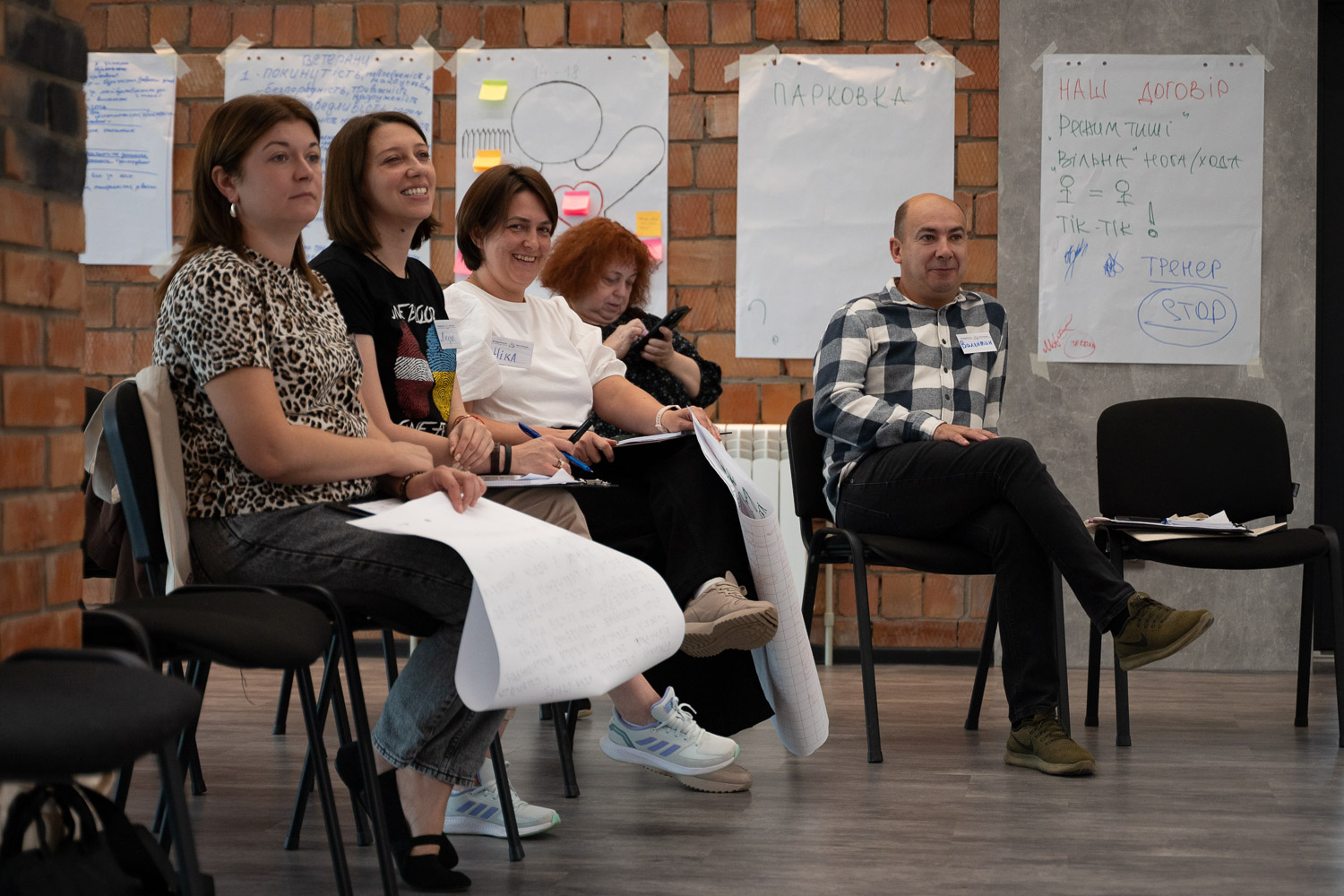
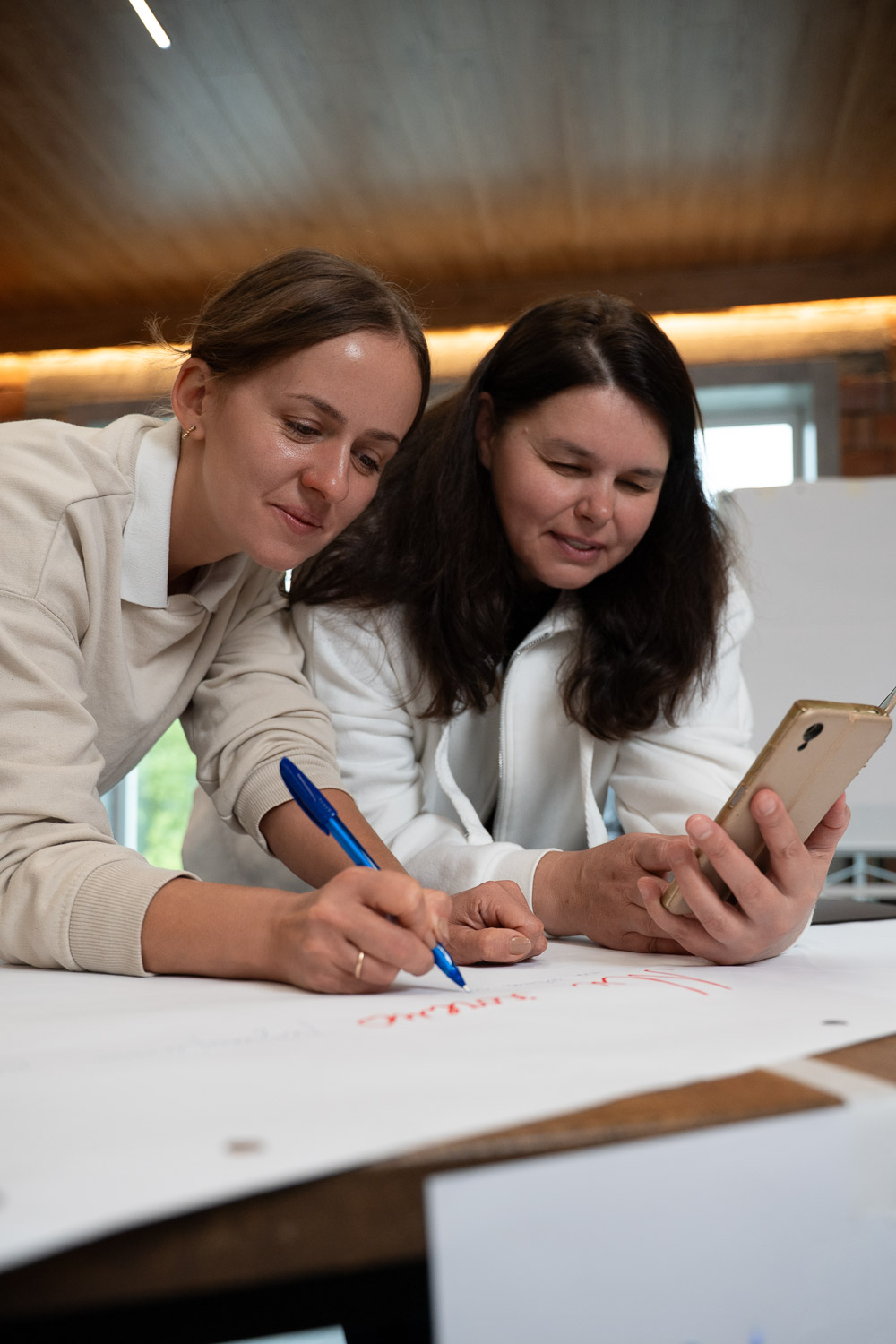
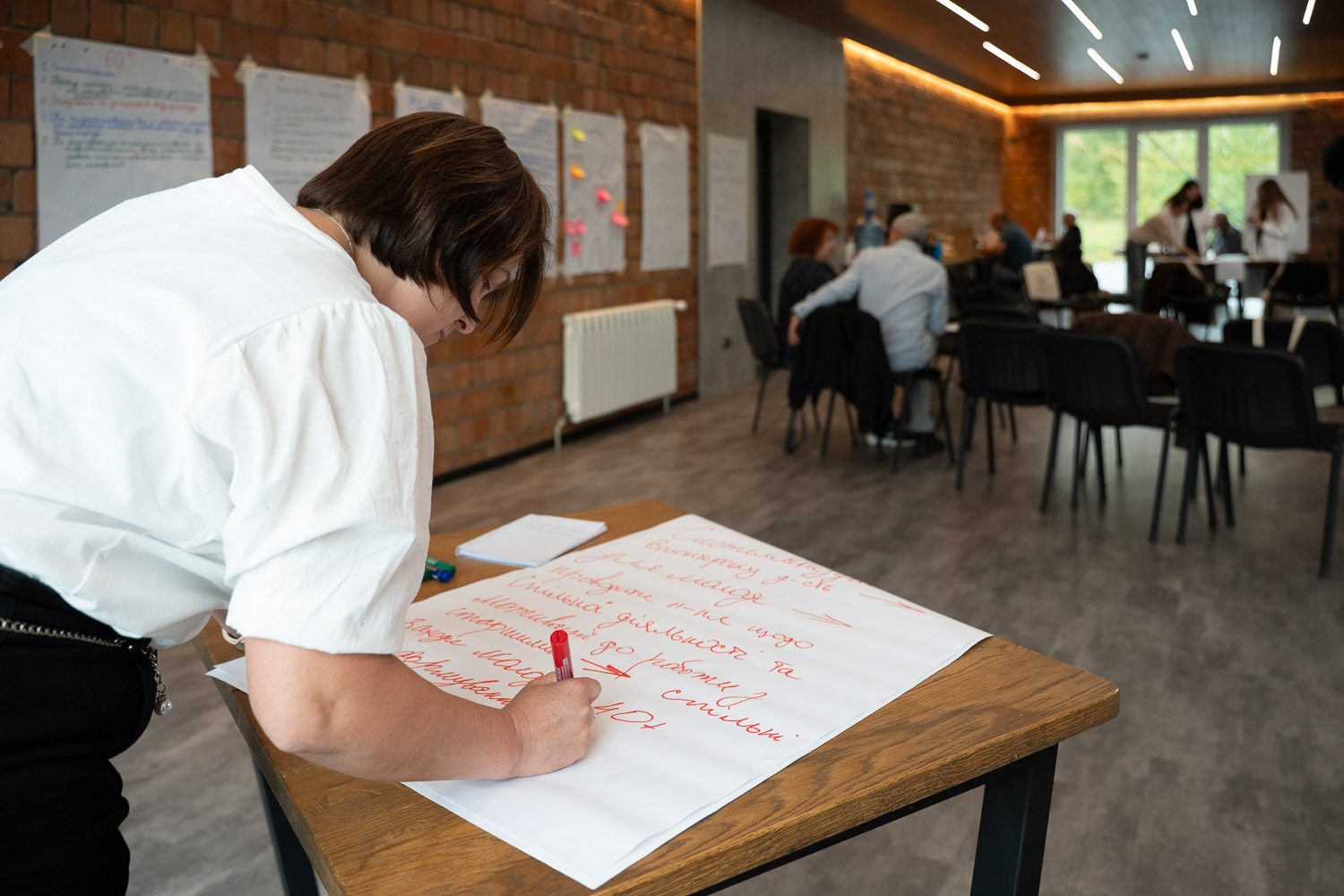
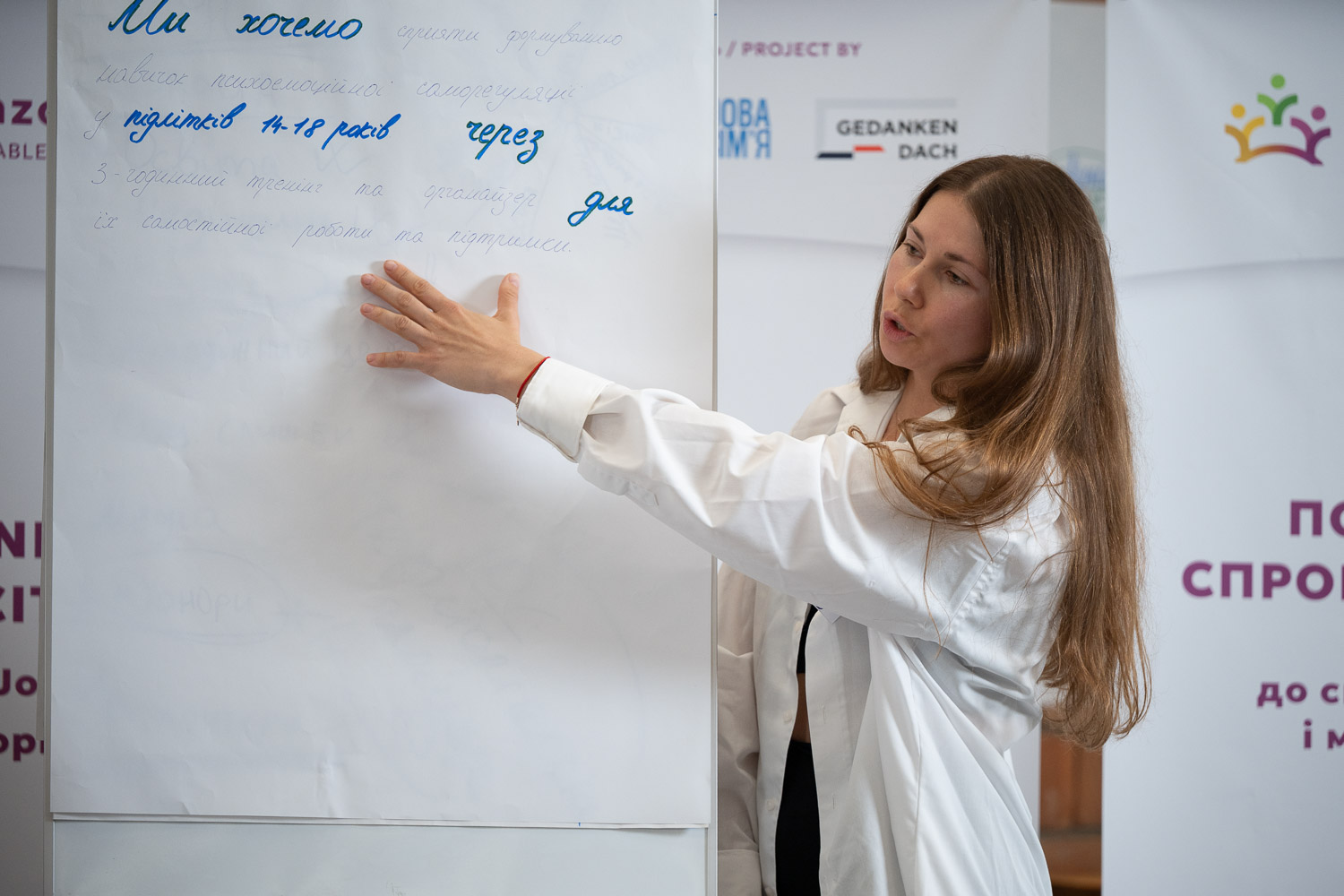
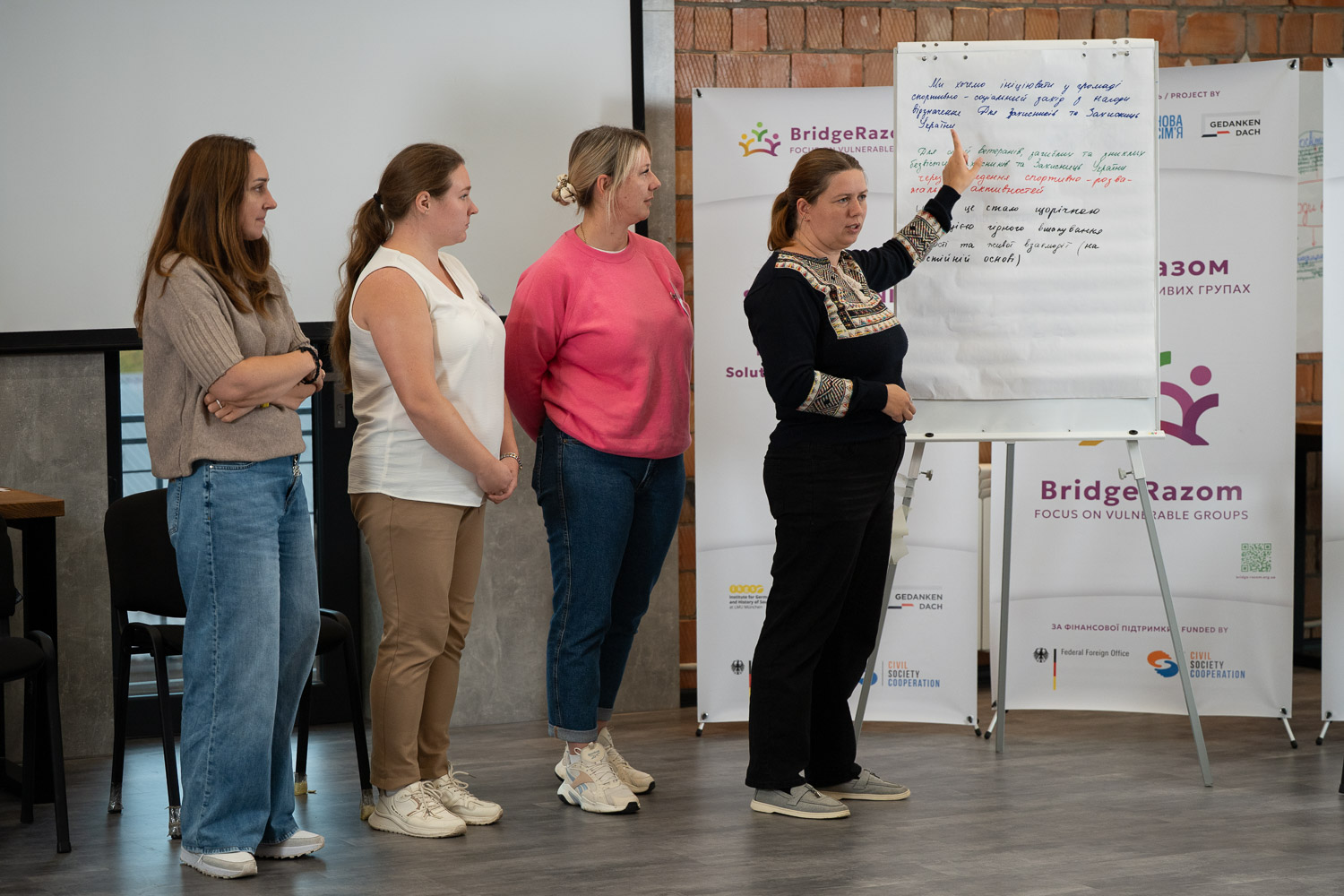
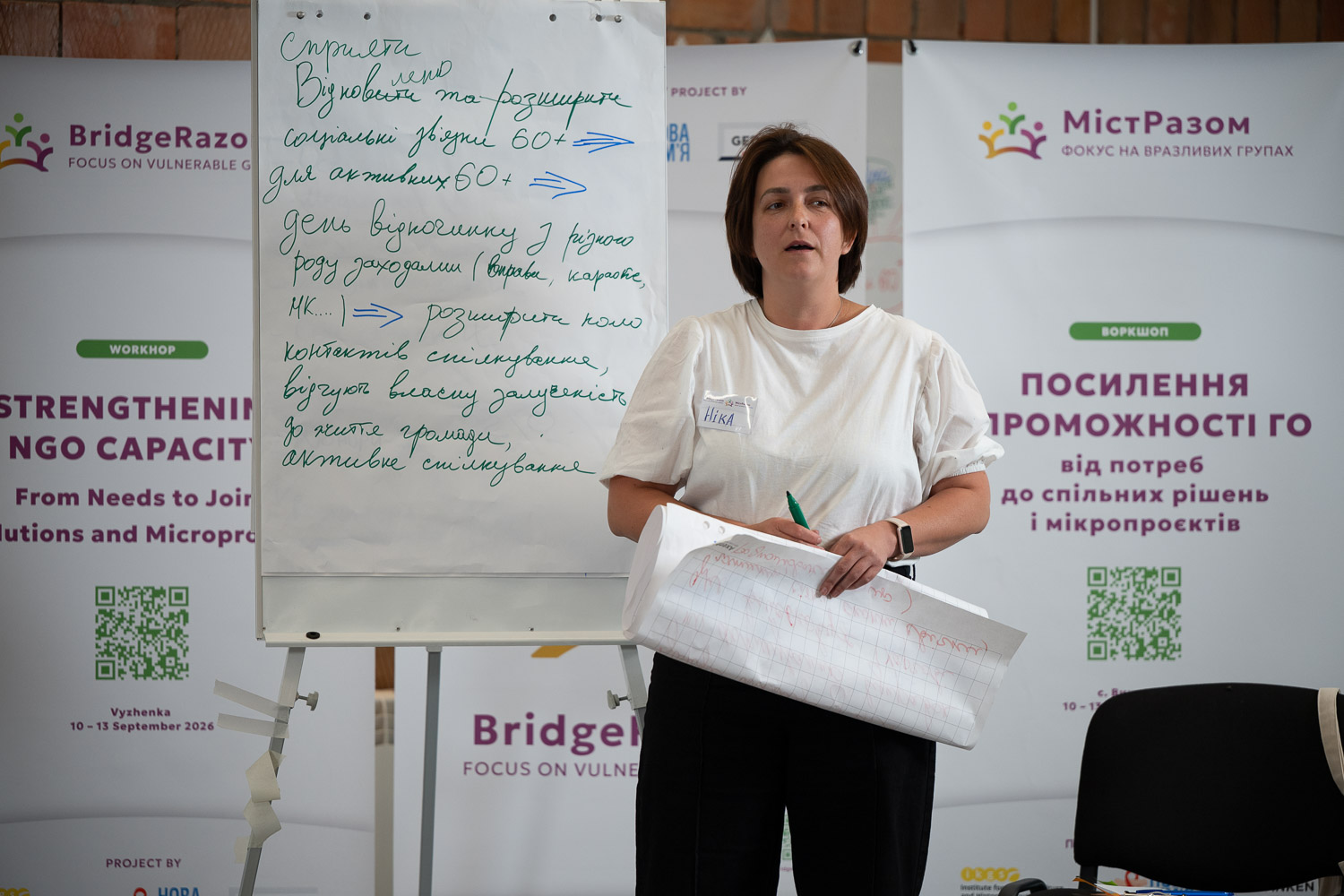
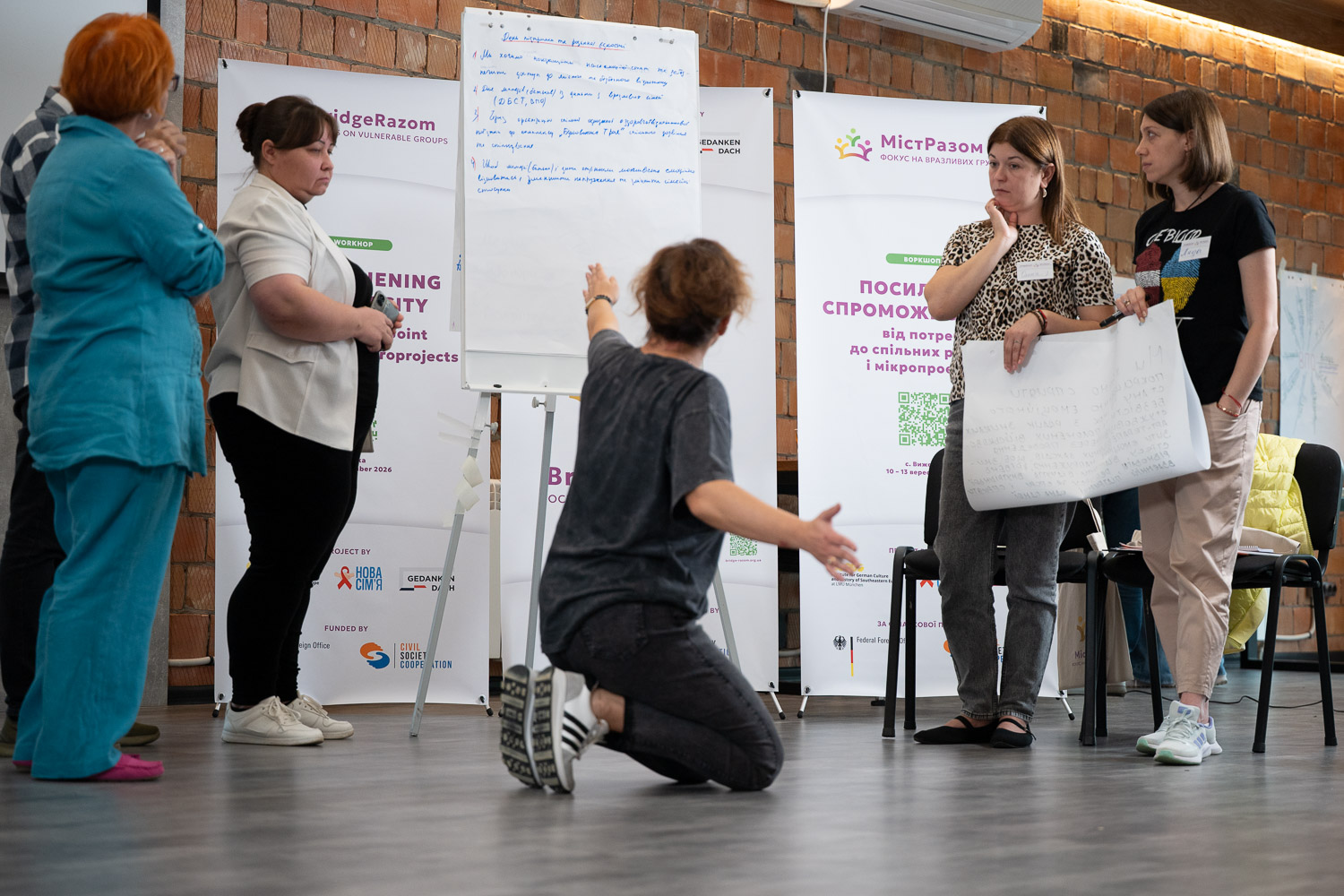
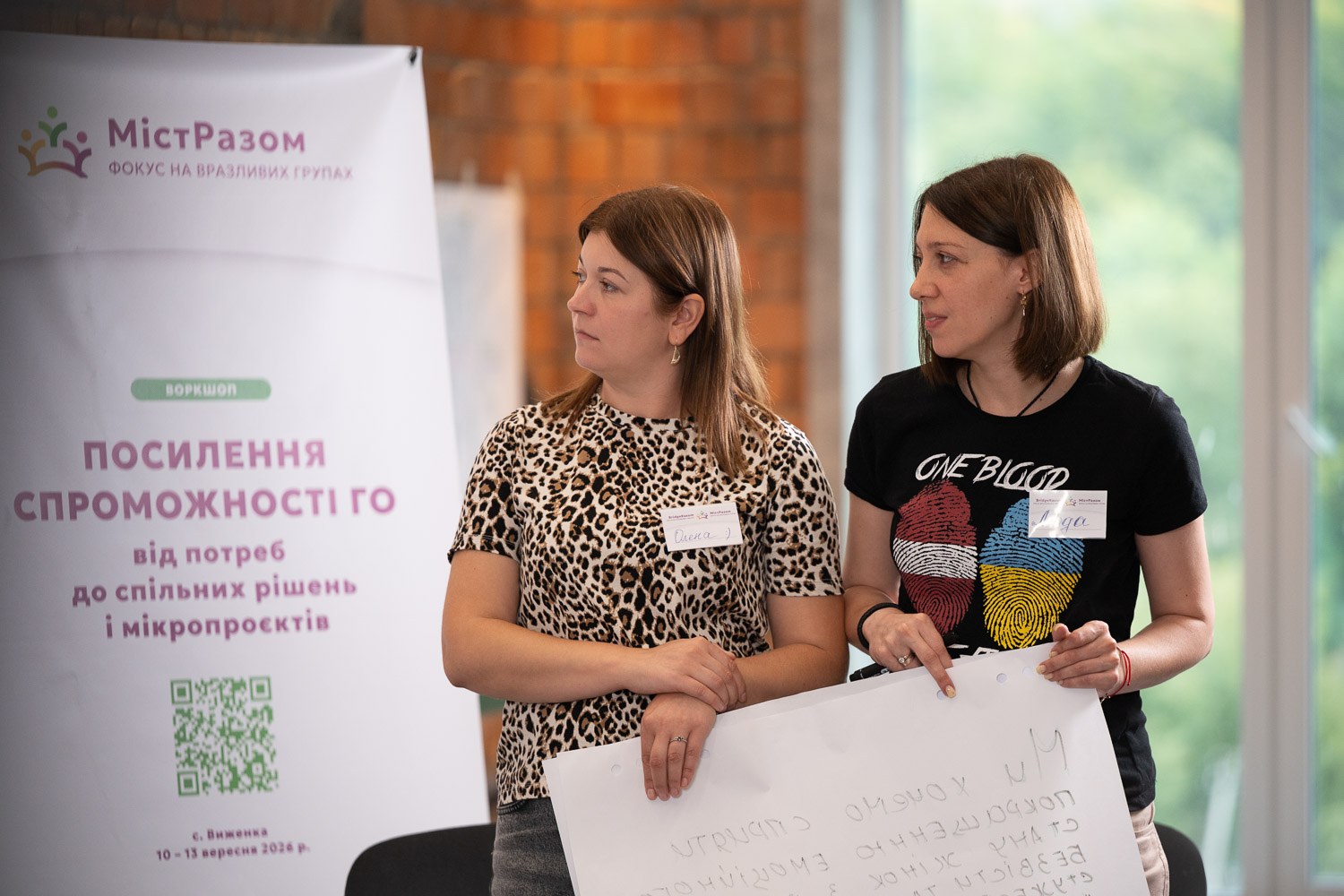
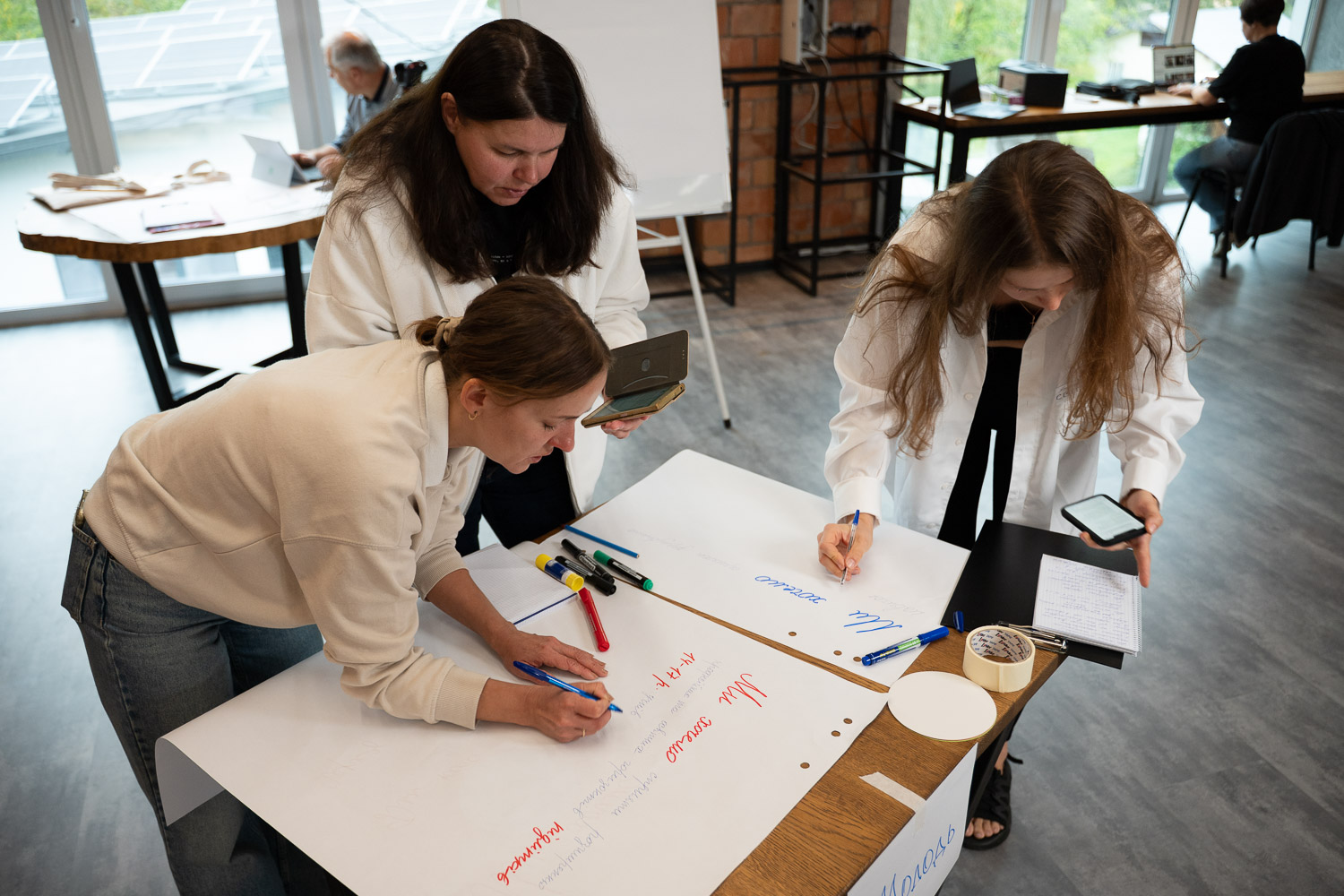
On 12 September, participants of the BridgeRazom workshop in Vyzhеnka moved from analyzing needs and identifying potential partners to developing their own micro-projects. Throughout the day, they worked in teams on their ideas, learning how to formulate goals and objectives, plan activities, define expected results, and calculate the resources they would need.
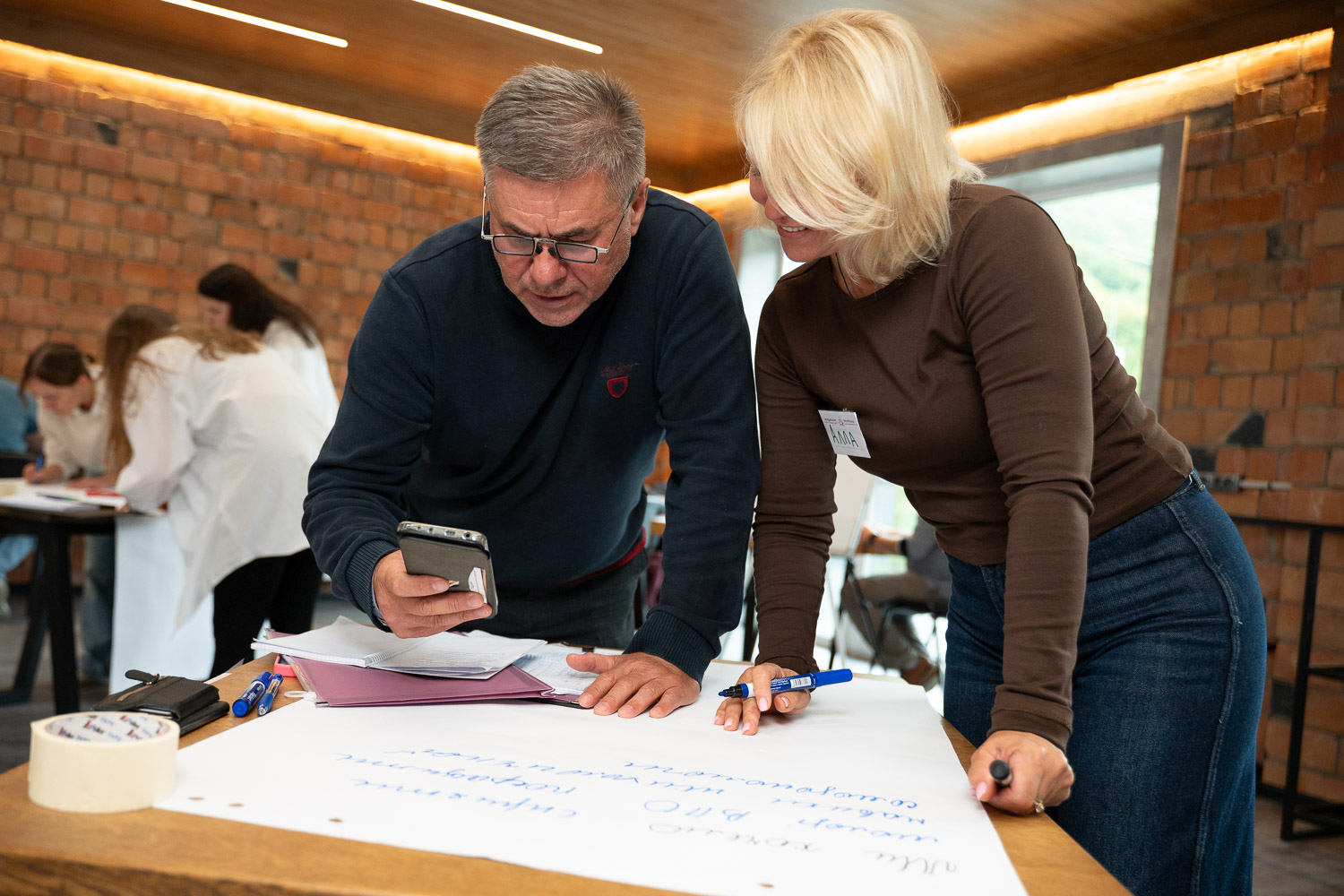
After two days focused on needs assessment, working with vulnerable groups, and partnerships, the third day took a practical approach: «From an Idea to a Micro-Project». Participants presented teams formed the previous day and began working together on their project concepts.
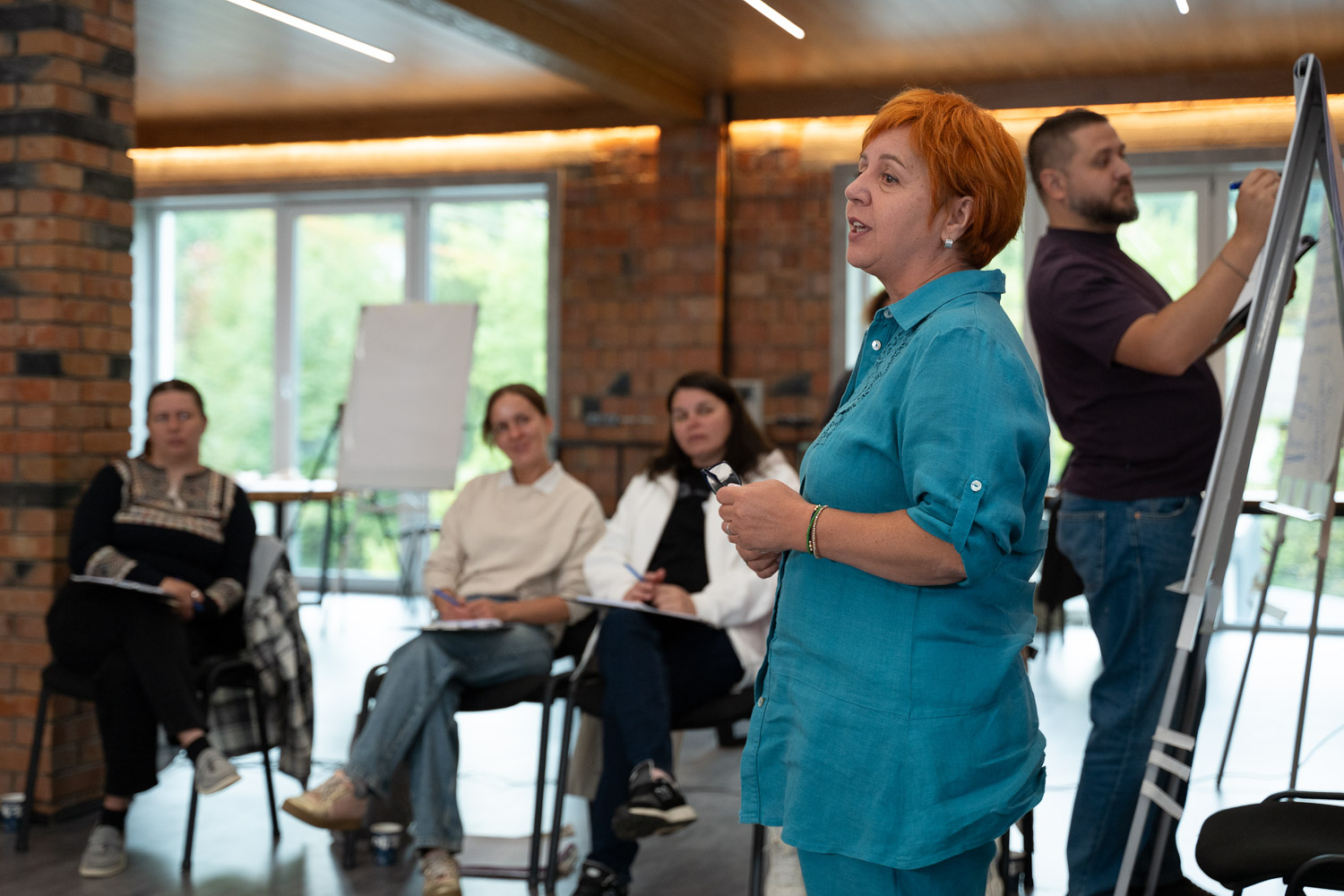
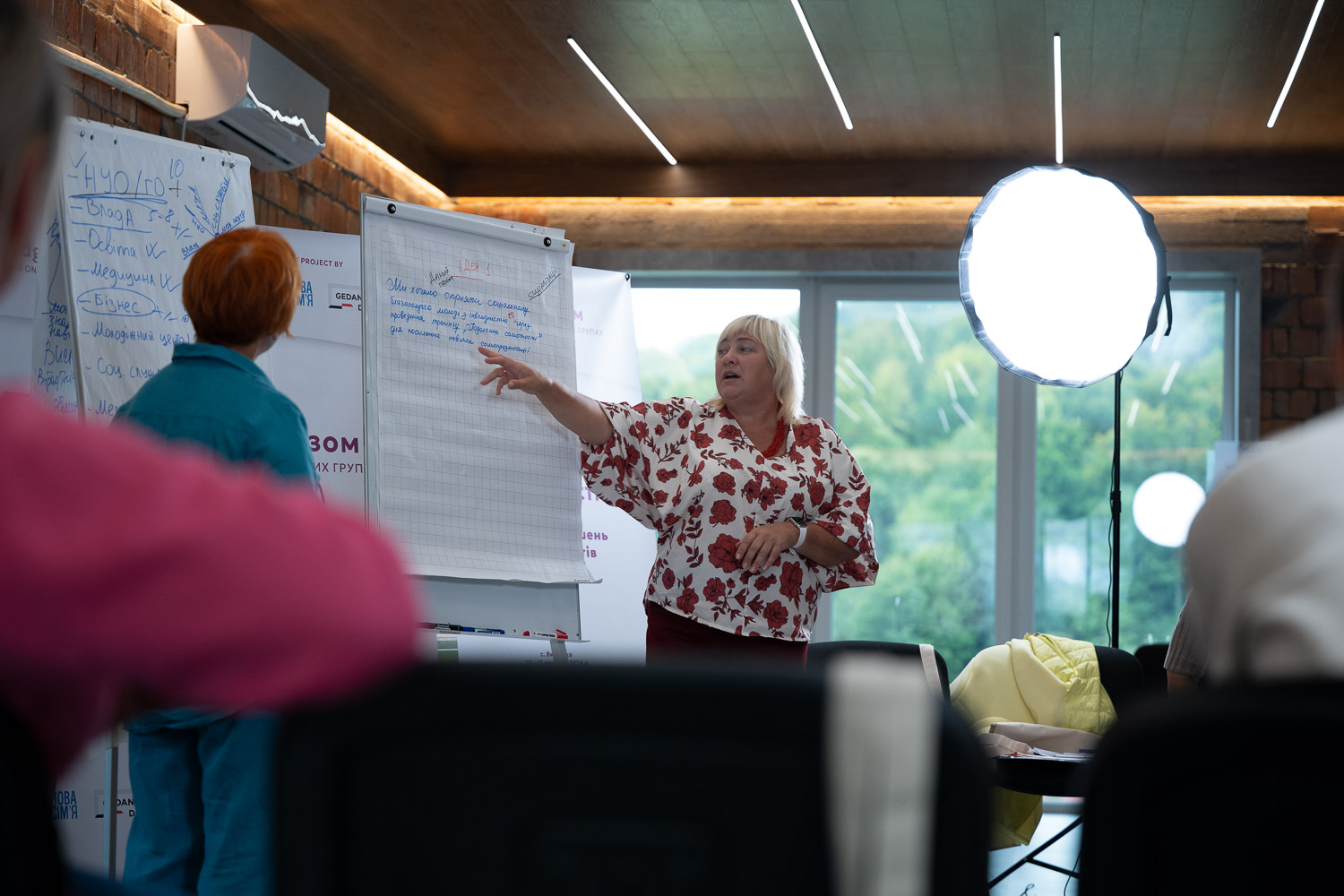
The first topic of the day was what makes a micro-project effective. Together with trainer Aliona Makedon, participants explored the key elements of a project: a clearly defined problem, a specific target group, a clear goal, logically connected objectives and activities, expected results, indicators, realistic resources, and a budget.
«A quality micro-project is not simply a set of good activities. We need to understand what problem we are addressing, who we are working for, and what specific change we want to create», said Aliona Makedon.
Particular attention was paid to the logic of a project: problem → goal → objectives → activities → results → indicators. This sequence helps determine whether the planned activities actually contribute to the desired change.
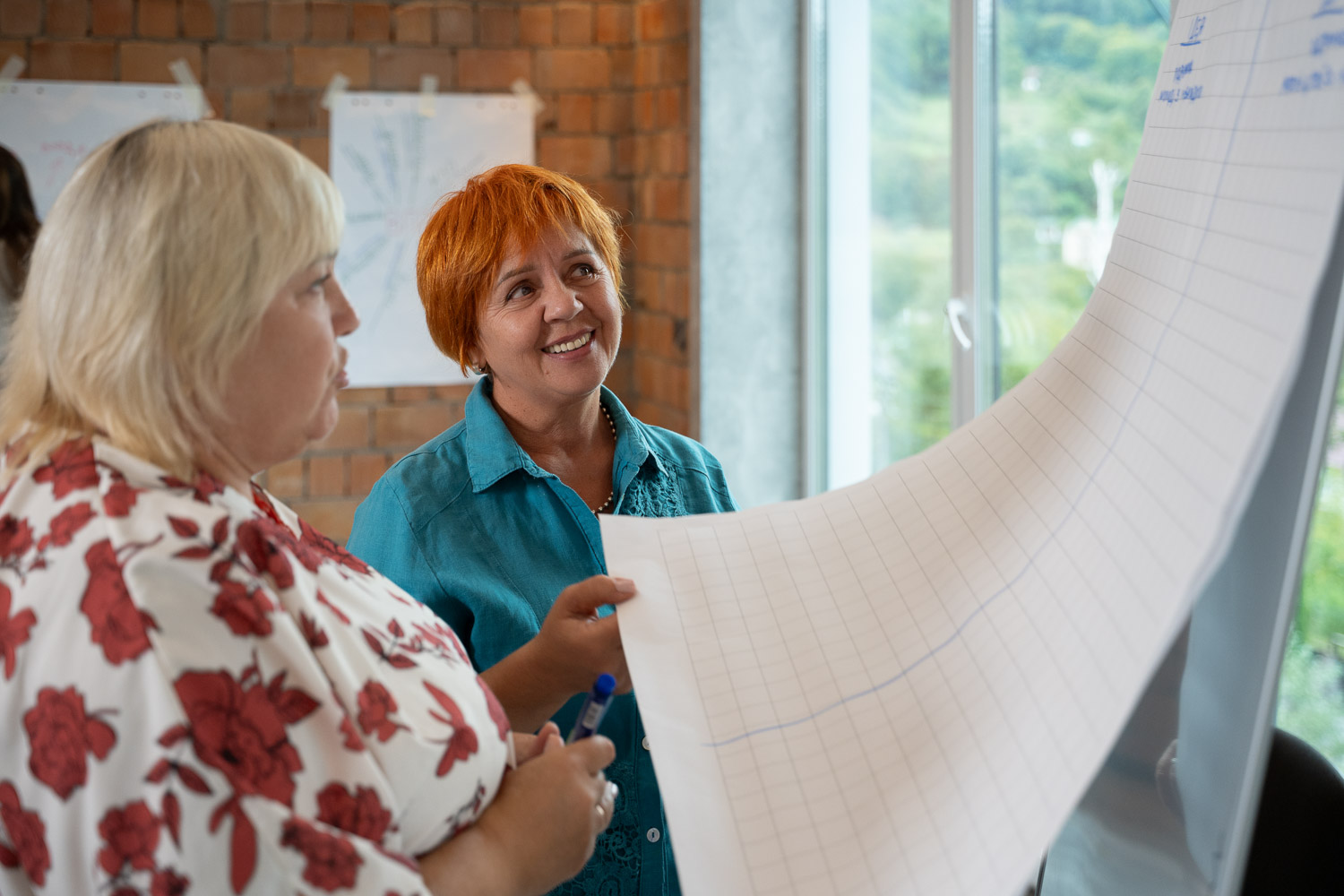
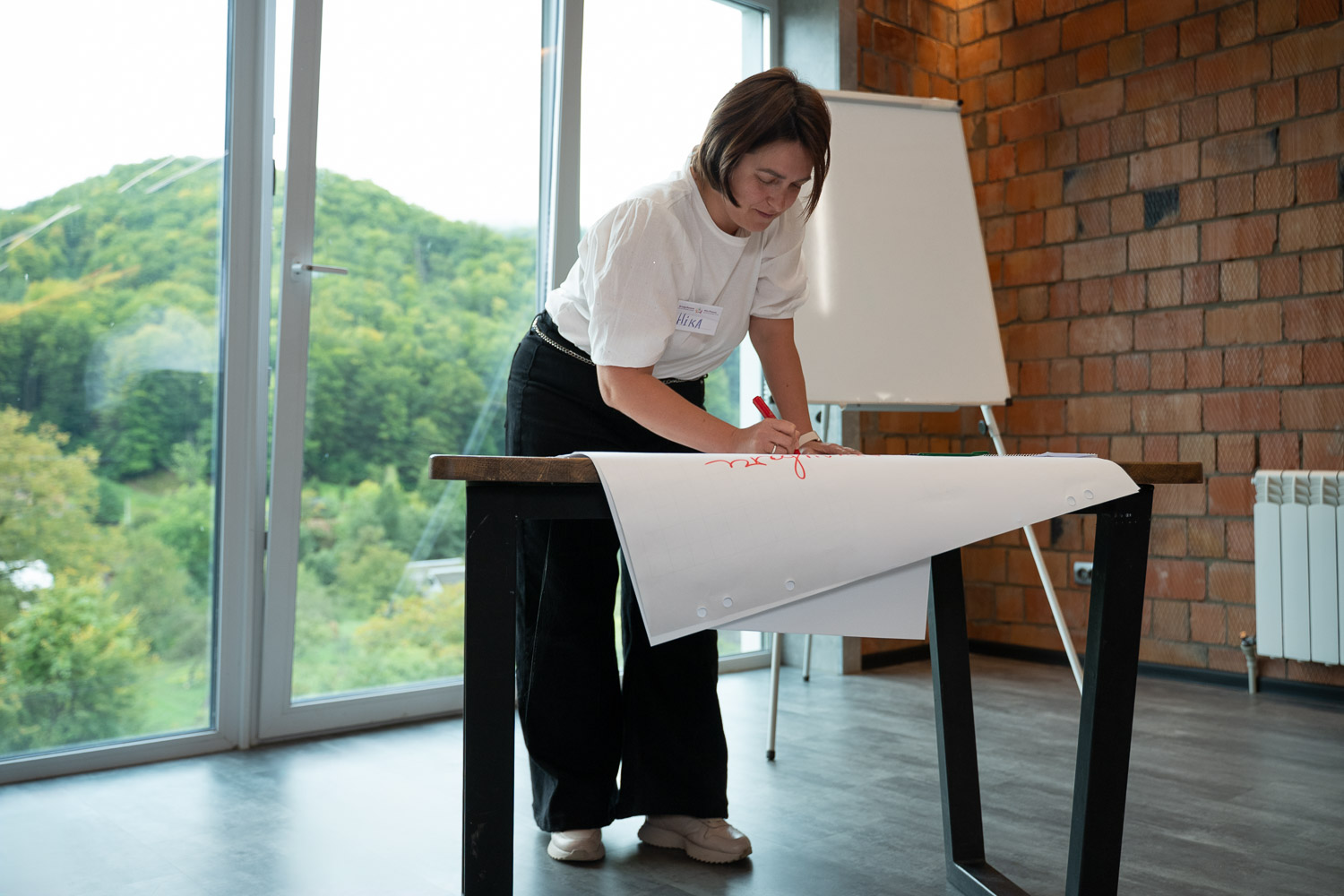
While working on goals and objectives, participants learned how to make them specific and measurable. The teams then planned their activities by answering practical questions: who will do what, for whom, and when, and what result should each activity produce?
Another important part of the team work was measuring results: how to determine whether the planned outcome has been achieved and what impact the micro-project has had. To do this, participants worked with indicators that can be used to track the progress and results of a project.
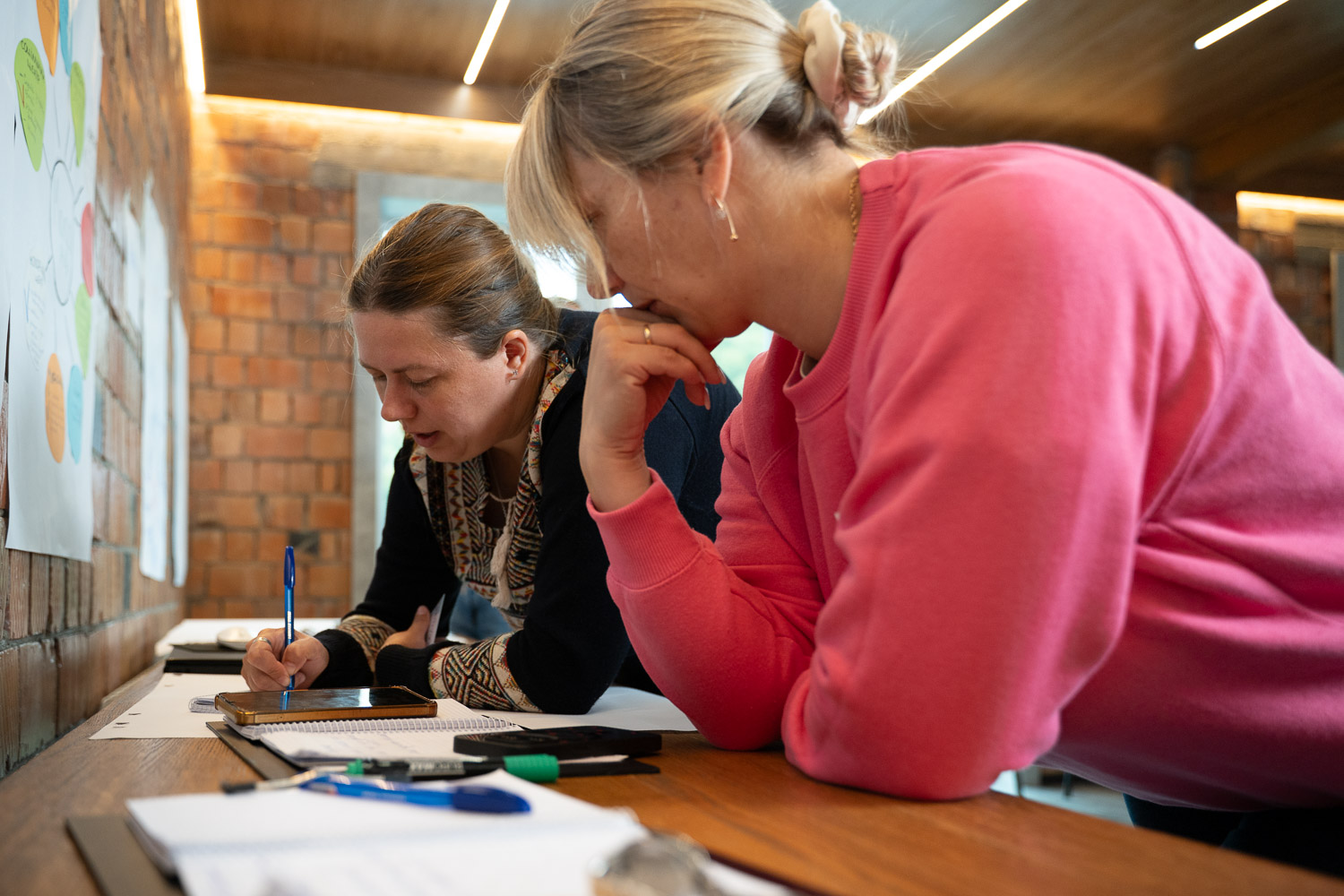
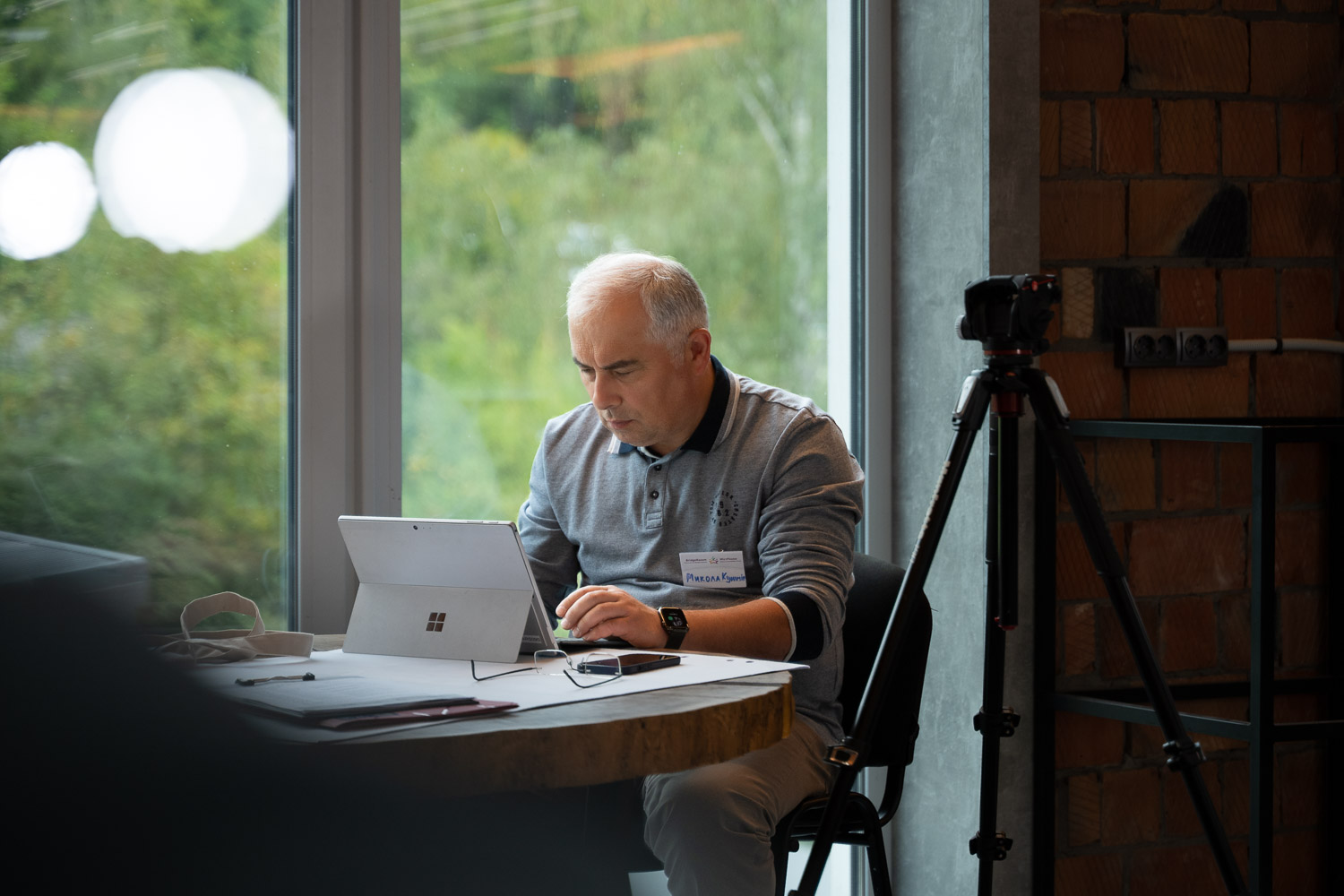
A significant part of the day was devoted to working directly on project applications. Participants developed their ideas, clarified individual elements of their projects, and discussed their questions with the trainers. This format allowed them to immediately put the tools they had learned into practice – not only learning about the structure of a quality project, but also testing it against their own ideas and receiving feedback.
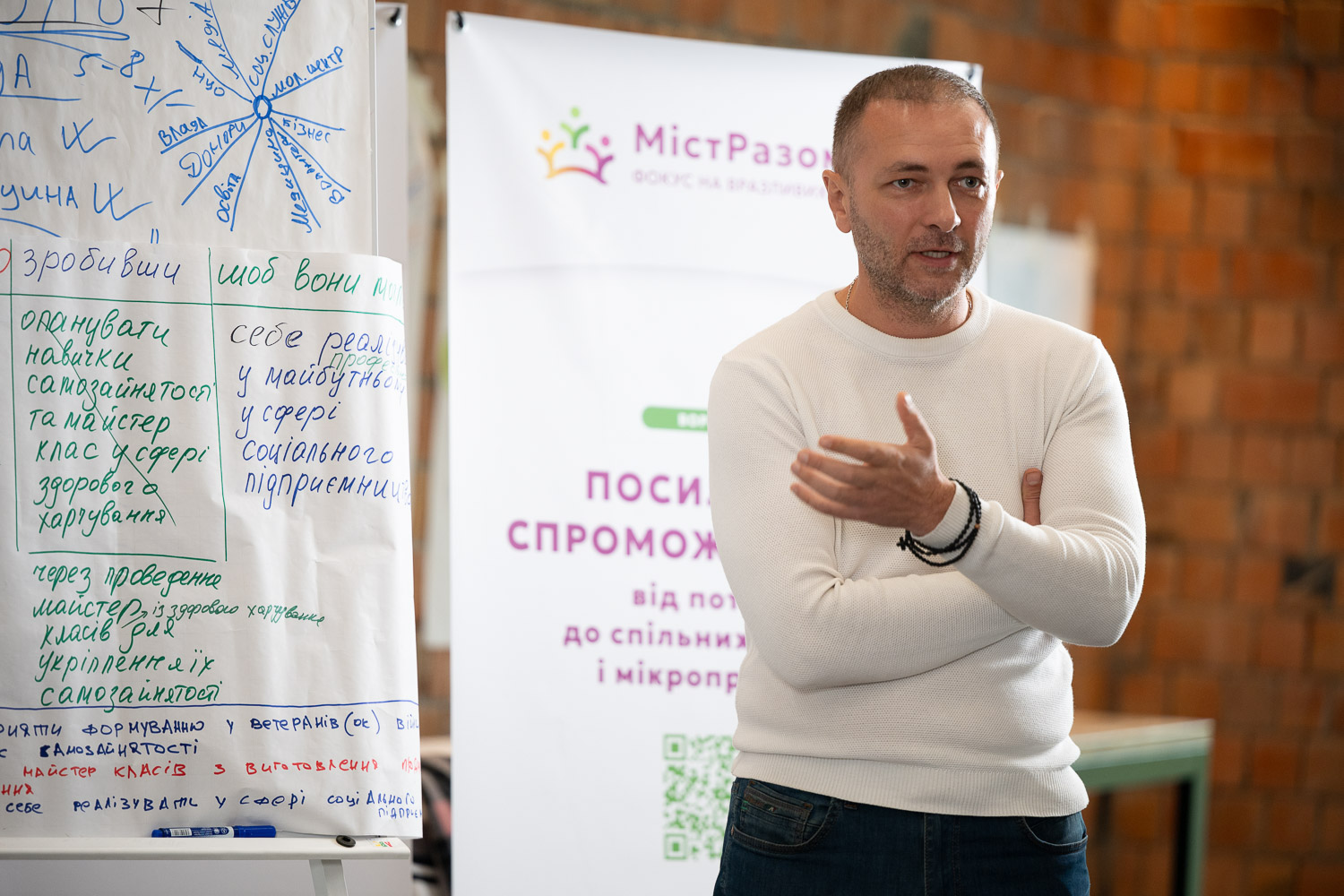
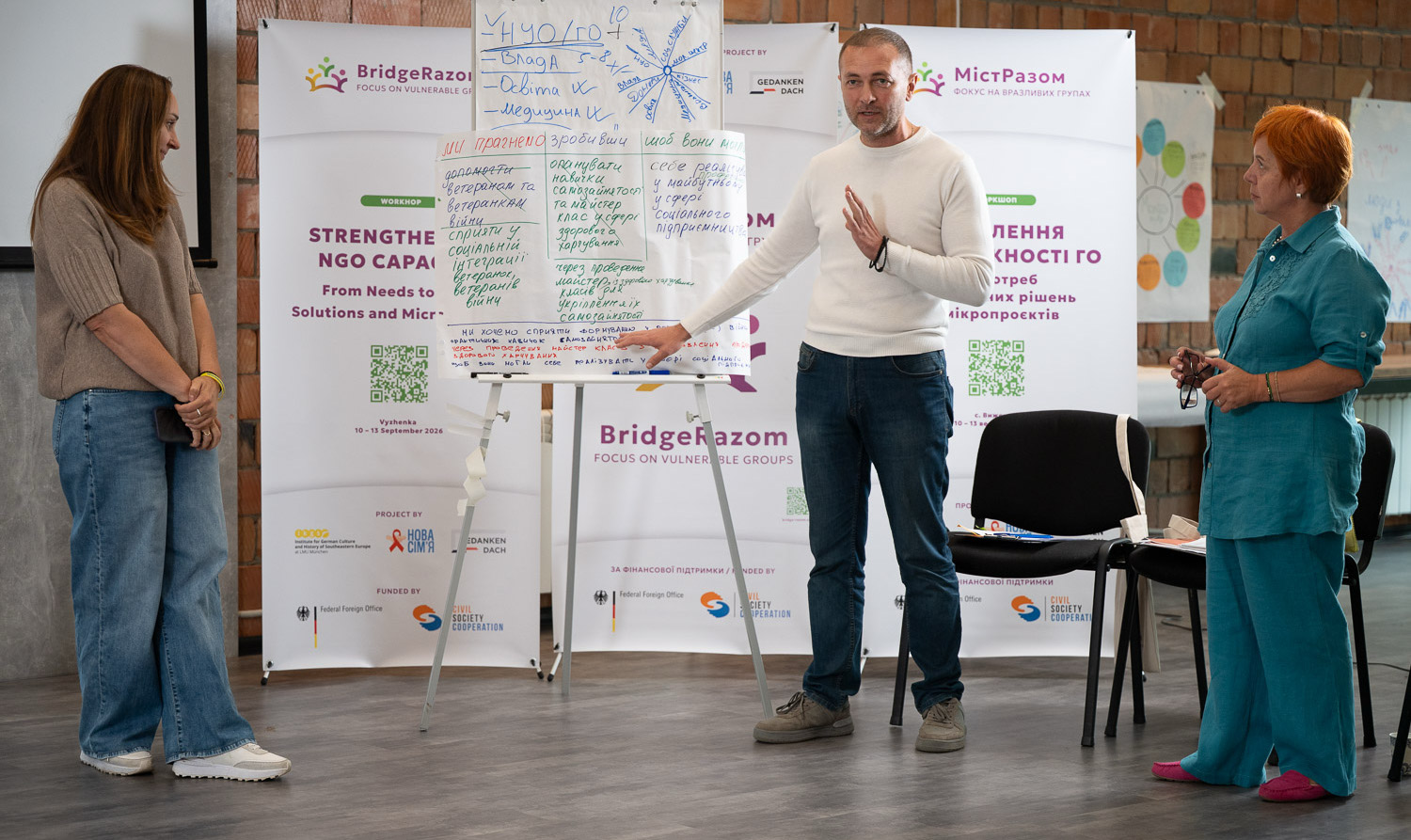
At the end of the day, the teams prepared short presentations of 12 micro-projects. Participants grouped themselves around thematic areas focused on working with veterans, people aged 60+, women with children, teenagers aged 14–17, internally displaced people and local residents, as well as people with disabilities.
The proposed projects included art therapy, training sessions, interactive activities, workshops, a trip to a sports and recreation complex and other activities. During the pitch session, the teams presented their work and received feedback from the trainers.
Tomorrow, the participants will present their revised micro-projects throughout the day
Written by Lilia Shutiak
Photos by Nataliia Paziuk
Photo report